
Hybrids
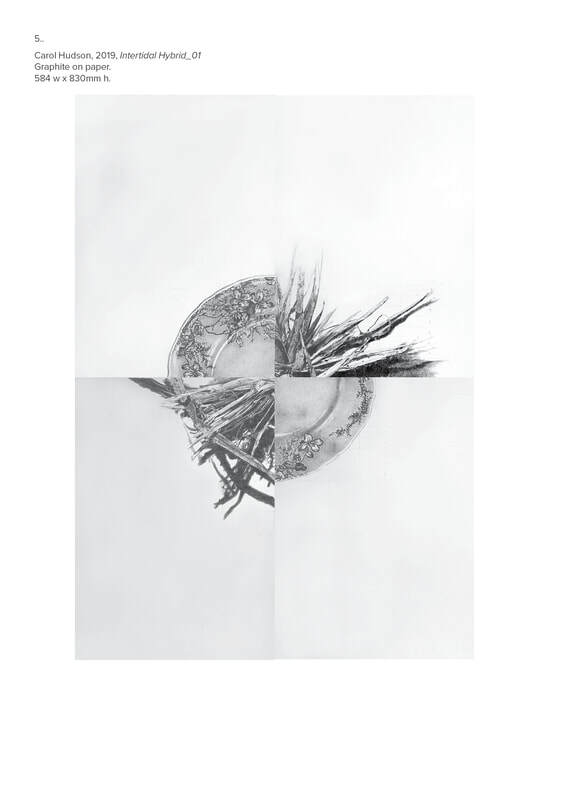
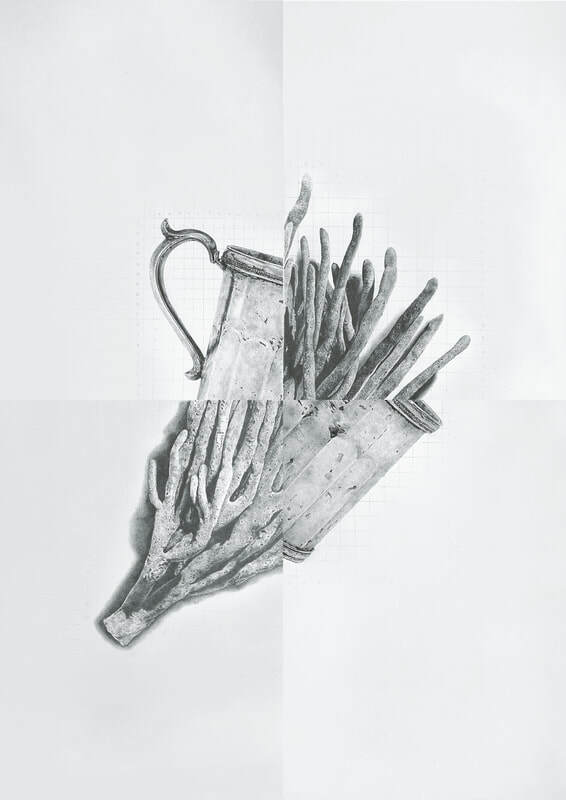
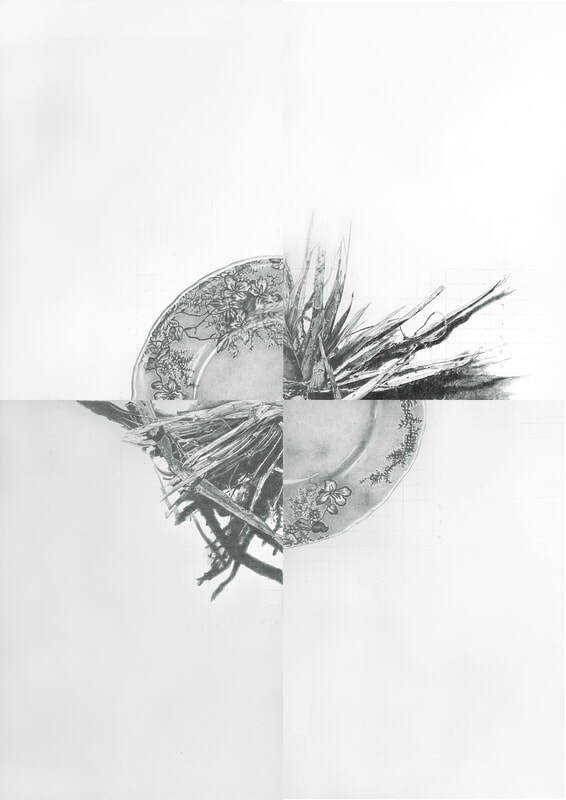
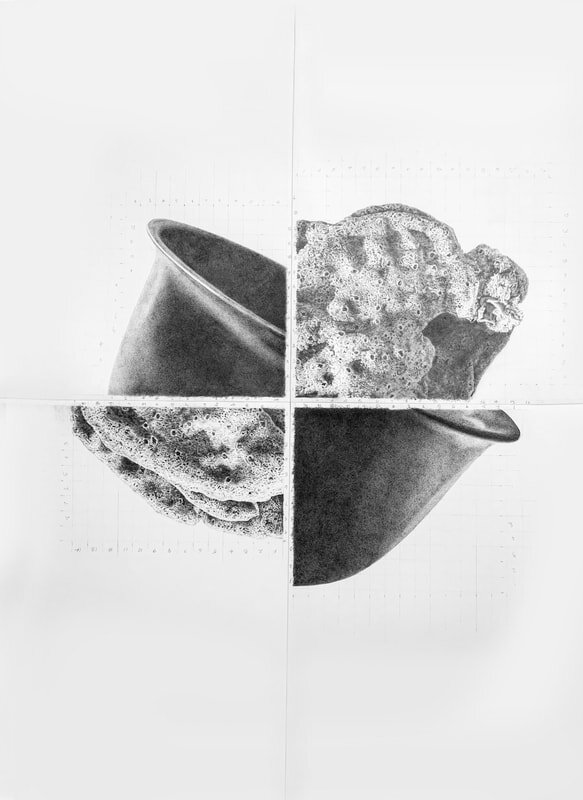
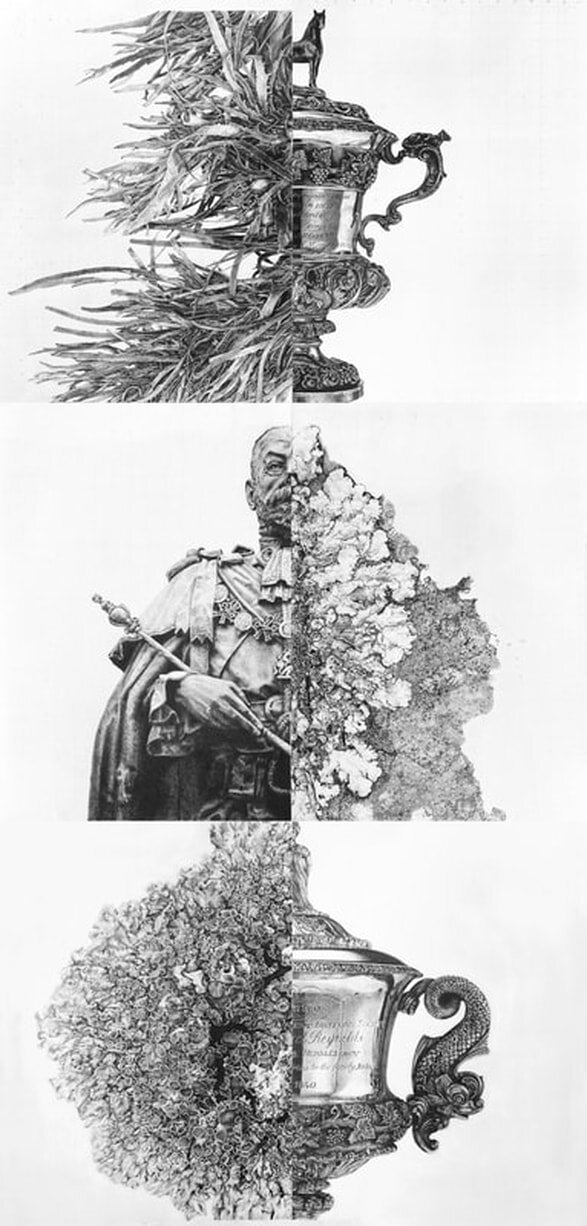
In these Hybrid drawings, I appropriated the tradition of colonial documentation of nature with specimens placed centrally on a page and isolated from their environment to invite close inspection without distraction. An exaggerated amount of white space was left to accentuate this tradition and to leave behind the structural grid used to translate the drawing from the photographic reference as evidence of the systematic, artificial making process of documenting the specimens.
I used everyday objects and unremarkable beach finds (such as dried grass and random shell collections) as my subjects, to contrast with the chosen ‘exotic’ specimens documented in Australia’s early colonial history. In these drawings I replaced hierarchy with a type of parity and connectedness, by documenting human artifacts and natural forms using identical drawing methodologies. These ideas are further developed in Intertidal Hybrid_01 and Intertidal Hybrid_02 where natural and colonial objects are spliced together to create new human and nature hybrids.
I used everyday objects and unremarkable beach finds (such as dried grass and random shell collections) as my subjects, to contrast with the chosen ‘exotic’ specimens documented in Australia’s early colonial history. In these drawings I replaced hierarchy with a type of parity and connectedness, by documenting human artifacts and natural forms using identical drawing methodologies. These ideas are further developed in Intertidal Hybrid_01 and Intertidal Hybrid_02 where natural and colonial objects are spliced together to create new human and nature hybrids.
The idea of interconnectedness is central to the drawing project as a more realistic idea of nature and a viable alternative to the impact Western hierarchical thinking has on nature.
One of the thinkers and writers promoting these ideas is Timothy Morton, who writes on the Romantics, food, culture, ecology, environmentalism, object-oriented philosophy and presents alternative ideas to traditional Western thinking to encourage reconnection with nature.
Morton’s work is about the implications of human interdependence with other beings which he sees as stark evidence that the separation between humans and nature is constructed and fictional. Morton sees a need to rethink the concept of nature as an understanding that all beings are interdependent and connected, from single cell organisms to chairs.
One of the thinkers and writers promoting these ideas is Timothy Morton, who writes on the Romantics, food, culture, ecology, environmentalism, object-oriented philosophy and presents alternative ideas to traditional Western thinking to encourage reconnection with nature.
Morton’s work is about the implications of human interdependence with other beings which he sees as stark evidence that the separation between humans and nature is constructed and fictional. Morton sees a need to rethink the concept of nature as an understanding that all beings are interdependent and connected, from single cell organisms to chairs.