
Colony
Colony combines vessels and natural forms specific to the Australian coast that clash and chip in their frictive, random and destructive interaction. This movement is created from a synthesised outside force, in this case wind and movement generated by a motor.
COLONY 2020.
PORCELAIN, STEEL, TIMBER, WIRING, AND MOTOR.
1620 x 2020 x 800 mm. AUD $28,500.
COLONY 2020 DETAIL
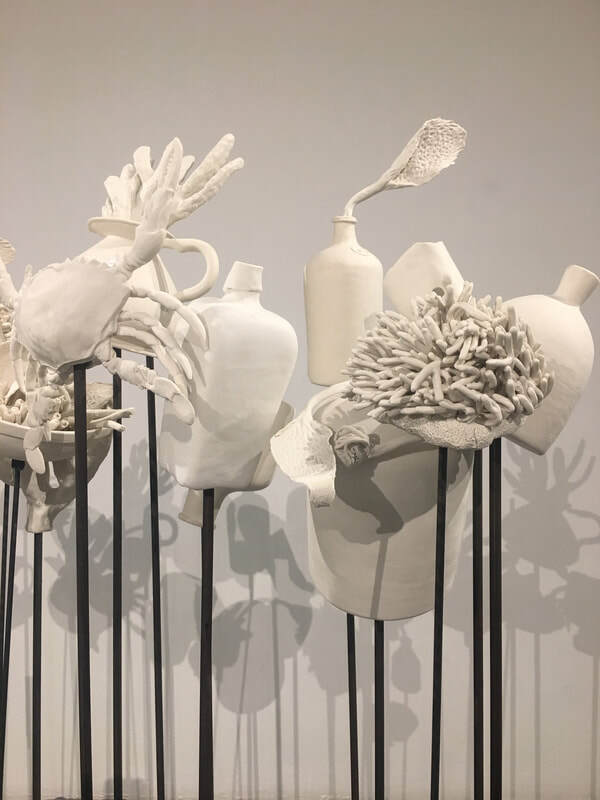
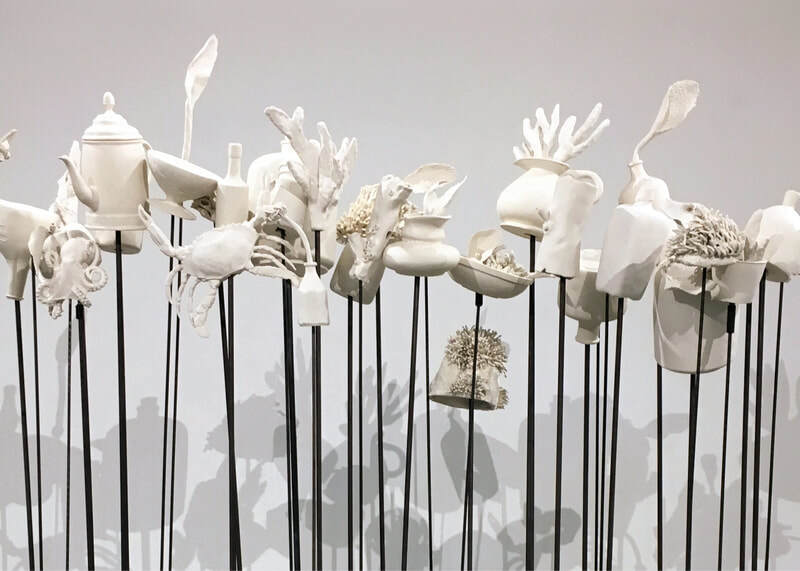
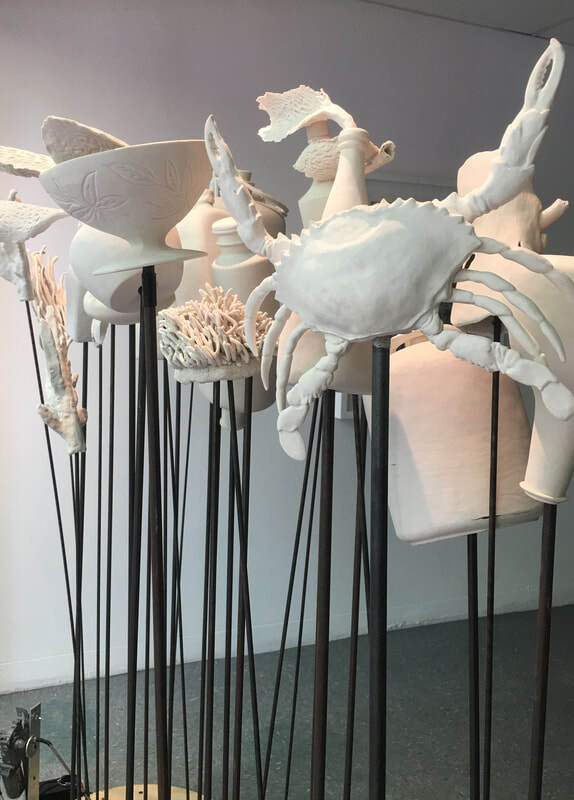
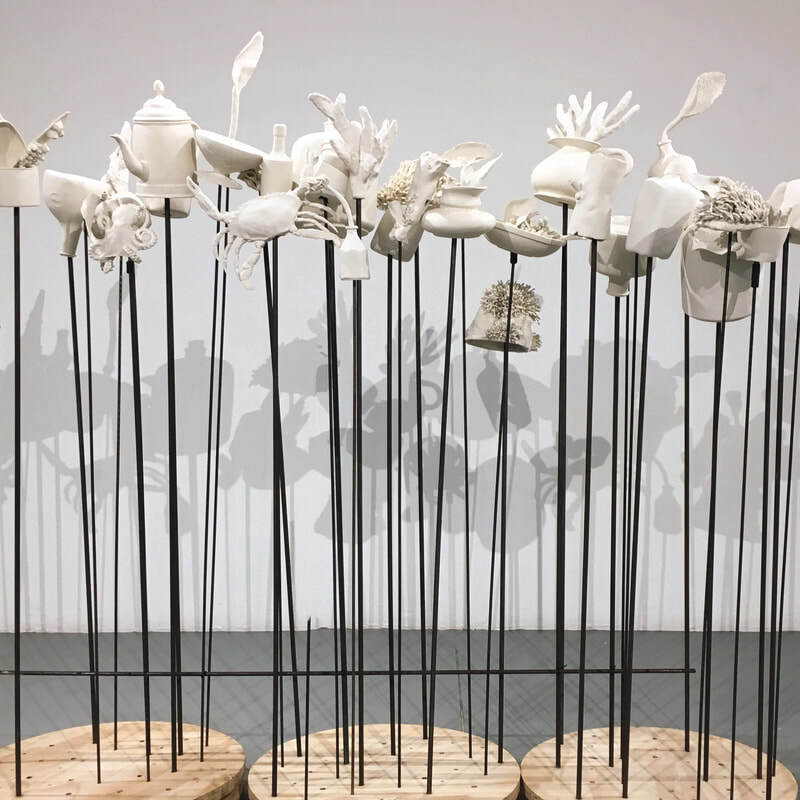
The wind’s action on the ceramics creates an uncomfortable sound as their movement chips and disintegrates the ceramics over time to metaphorically create a new geological strata of sand.
Colony is concerned with European culture’s destructive impact on the landscape, contrasting European culture and nature through the use of artefacts, mainly colonial food vessels. The Intertidal project uses such vessels and objects to create a sense of connection to place and our shared Australian history since 1788.
It also enables an historic reference to the effects of Western culture on Australia’s fragile environments, points to those outmoded colonial ways of thinking about nature and the legacy of disconnection in Australia.
The use of artifacts — some found in Sydney’s contemporary excavations of colonial sites — helps to connect us to shared local history, as Lucy Lippard says:
“History known is a good thing, but history shared is far more satisfying and far reaching. The layered history of words and places is barely visible to the outsider, and less and less visible to the insider. ...Our town histories can inform their residents lives.”
Lippard is a supporter of the sharing of local history through art and its ability to connect people to place. Lippard believes that an intimate knowledge of place binds us to place, creates care about what happens to it, and asserts that having a known and shared history goes a long way to creating that intimate knowledge. It is a way for humans to be with nature, with less fear and more appreciation.
Colony works embrace meticulous crafting of collections of functional colonial vessels, drawn from early Australian colonial history, and natural forms of the beach. The bleached white materiality and shell-like brittleness of unglazed porcelain links the works and represents the whiteness of Western culture with its ability to bleach indigenous cultures and landscapes.
Significantly, unglazed white porcelain has a strong reference to recent coral bleaching events globally and more locally in the northern parts of The Great Barrier Reef over the past ten plus years.
INTERTIDAL AT STACKS PROJECTS AND BONDI PAVILLION
Contrasting colonial and natural objects is simultaneously a reference to colonial dislocation that lacks intimate knowledge of the Australian landscape and Aboriginal people, our shared history, and a visualization of the inextricable interconnection of humans with nature.
Colony II
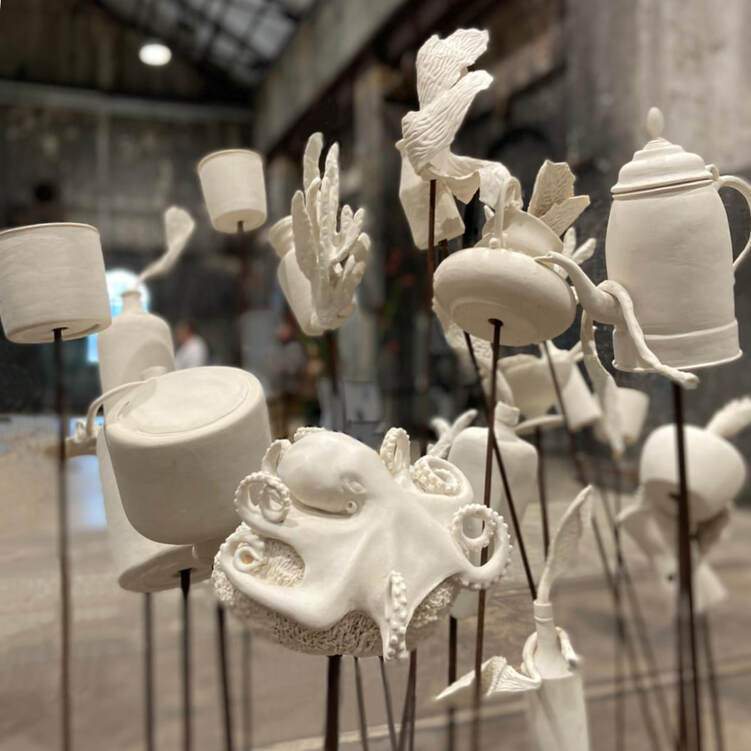
Colony 2024. Porcelain, steel, timber, wiring and motor. 1520 x 1420 x 700mm. AUD $12,500.
Colony is on a reduced scale with Colony II to enable exhibiting in different locations. Above is an image of Colony II at Carriageworks in Sydney.